
If you've been watching the housing market lately and wondering what to think whether you should sell, buy, wait, or just stay put you're not alone. I talk to people every week who are trying to make sense of what they're hearing, and honestly, the noise can be overwhelming.
So let me offer something a little different: just the facts, some local data, and a straightforward way to think about it.
Here's what I can tell you with confidence after reviewing 13 months of real Manteca single-family home data: this market has changed. It's not the same market we were in a year ago. But that doesn't mean it's a bad market. It means it's a different one, and understanding the difference is what will help you make a smart decision, whatever that decision is.
The Numbers Worth Knowing
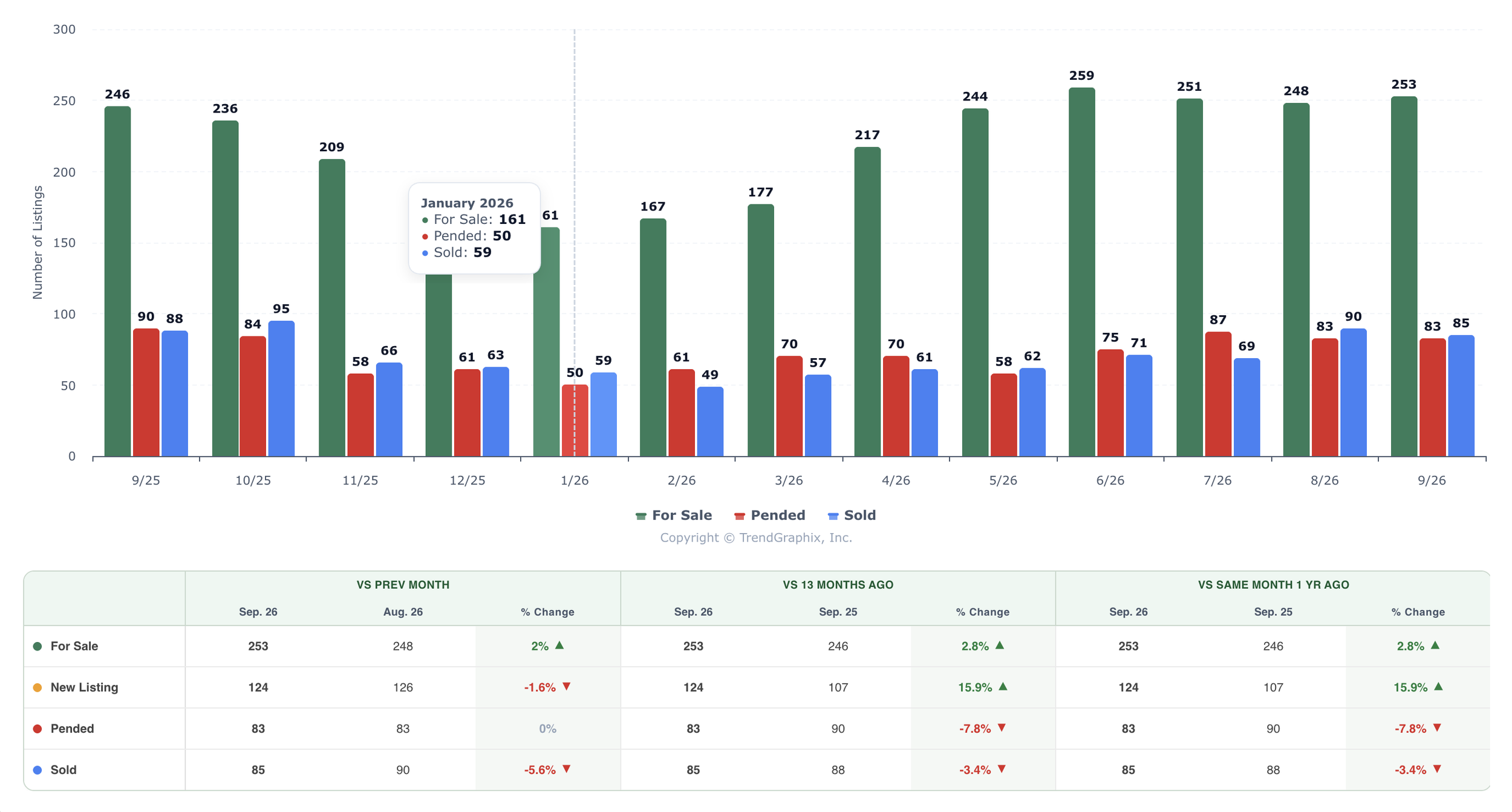
Let me walk you through what the data is actually showing.
Homes are still selling. In September 2026, 85 homes sold in Manteca; that's a healthy number. The year-over-year decline in volume isn't dramatic, and the market hasn't stalled.
There are more choices right now. A year ago in September 2025, there were 246 homes for sale. Today that number sits at 253. That's a meaningful shift for buyers who spent years competing over almost nothing.
Prices have softened but not collapsed. The average sold price in September 2025 was $630,000. In September 2026, it was $598,000. That's about a 5% decrease over the year. The median sold price moved from $590,000 to $582,000 in the same window. These are real adjustments, not catastrophic ones.
Well-priced homes are still getting very close to list price. In September, the average sold-to-list ratio was 99%. That means sellers who priced correctly right from the start were walking away with nearly full asking price. That's a meaningful data point.
Homes are taking a little longer to sell. A year ago, the average days on market was 60 days. In September 2026, it was 43 days. That sounds better, but early October data is showing 57 days on average, up 78% compared to the same time last year. That tells us something.
What This Data Is Actually Telling Us
Here's the theme that runs through everything above: pricing matters more than it has in years.
In the peak market, an overpriced home might still sell. Buyers had fewer options and more urgency. That's not the case today. Buyers have more inventory to compare, more time to think, and less pressure to stretch. When a home is priced above what the data supports, buyers notice, and they wait.
The sellers I see doing well right now are the ones who came in with a realistic price from day one. Their homes are getting offers quickly. They're closing at or near list price. They're not chasing the market.
The sellers who struggle are often the ones who priced for the market of 18 months ago. They've had to reduce. Some have reduced more than once. And by the time a price cut happens, buyers start wondering why the home is sitting, which creates a new obstacle.
I've said this to clients for years, but it's never been truer than right now: the first two weeks of a listing matter most. That's when the most interested buyers are watching. Coming in right gives you the best shot at the cleanest outcome.
A Word About Interest Rates
Yes, rates are higher. And yes, that has shaped buyer behavior. Some buyers have stepped back entirely to wait and see. Others have adjusted their expectations or their price range. Still others have decided that waiting indefinitely for rates to drop is its own kind of risk, especially if they're renting or in a home that no longer fits their life.
What I've noticed is that buyers who are truly motivated are still buying. They're being more deliberate, more careful, and more focused on value. They're not waiving inspections or making rash decisions the way buyers sometimes did when competition was fierce. They're doing their homework.
For sellers, this means meeting the buyer where they are. That might mean pricing conservatively, being open to negotiations, or considering a seller concession to help a buyer with closing costs. None of those things are signs of weakness in this market; they're signs of someone who understands the landscape and wants to actually close.
If You're Thinking About Selling
The market still favors sellers; we're at roughly three months of inventory, which technically qualifies as a seller's market. But "seller's market" doesn't mean buyers will accept anything. It means well-prepared, well-priced homes have a real advantage.
Before you list, talk to someone who can show you the specific data for your neighborhood, your price range, and your property type. A general market report tells you the overall picture; a comparative market analysis tells you your number. Those two things can be very different.
The sellers I worry about are the ones who hear "seller's market" and assume the work is already done. In this environment, preparation and pricing still require attention and strategy.
If You're Thinking About Buying
There is more to look at right now than there has been in several years. You have time to be thoughtful. You're not competing the same way buyers were in 2021 or 2022.
Rates are a real factor in your budget, and I won't pretend otherwise. But it's worth running the actual numbers, not just the headline rate, to understand what a home purchase looks like for your specific situation. And it's worth remembering that refinancing is always an option if and when rates come down. Buying the right home at today's price and refinancing later is a strategy many people have used successfully.
What I would caution against is waiting indefinitely in hopes of a perfect moment. Markets move, and the "perfect time" is usually a story we tell ourselves in hindsight.
If You're a Homeowner Who's Not Sure What Your Next Step Is
Maybe you've been in your home for many years. Maybe the home is bigger than you need now, or the stairs have become a conversation, or the yard is more work than it used to be. Maybe you've been wondering whether a move makes sense financially, or whether there are communities designed for the way you want to live next.
You don't have to be rushing toward a decision to start asking good questions. What is your home worth in today's market? What would a smaller, lower-maintenance home cost you? What does that math look like?
I have those conversations often, and they're never high pressure. Sometimes people find out a move makes a lot of sense sooner than they thought. Sometimes they decide to stay put for now. Either way, having the information tends to feel better than wondering.
The Bottom Line
This is a market that rewards preparation, realistic expectations, and good information. It's not a market to panic about, and it's not a market to dismiss. It's a market to understand.
If you have questions about what this means for your specific situation, whether you're thinking about selling, buying, or just taking stock of where you are, I'm always happy to have that conversation.
Lori Little
Realtor - DRE #01758039
TLC Real Estate / RE/MAX Executive
209-427-1687
lori.little@tlcrealtors.com
All data referenced in this post is sourced from Manteca single-family home MLS records, September 2025 through September 2026.